Prisma ORM 6 Support Ends 19 November 2026: What to Do Now
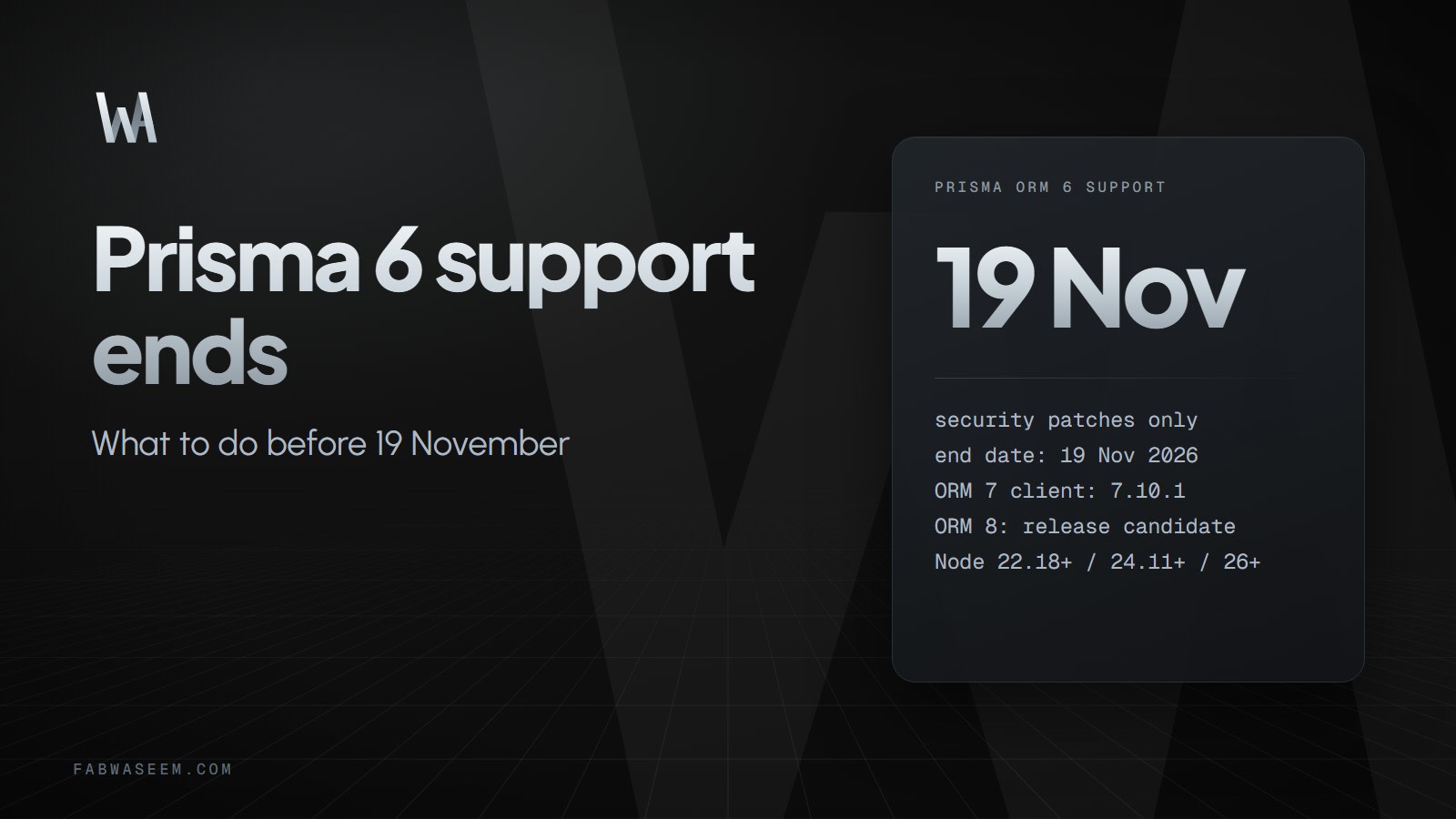
Prisma ORM 6 stops receiving security patches on 19 November 2026. Here is what the official release-status page says, who is affected, and a short checklist for moving to ORM 7.

On this page
If you still run Prisma ORM 6, there is a date to put in your calendar: 19 November 2026. After that, the official support policy says ORM 6 no longer gets even security patches. The checklist below follows Prisma's official release-status page and changelog; check each step against your own schema.
What does the Prisma support policy say?#
The release-status page sets out three tracks. On 11 November 2026 it listed latest versions dated 6 November 2026.
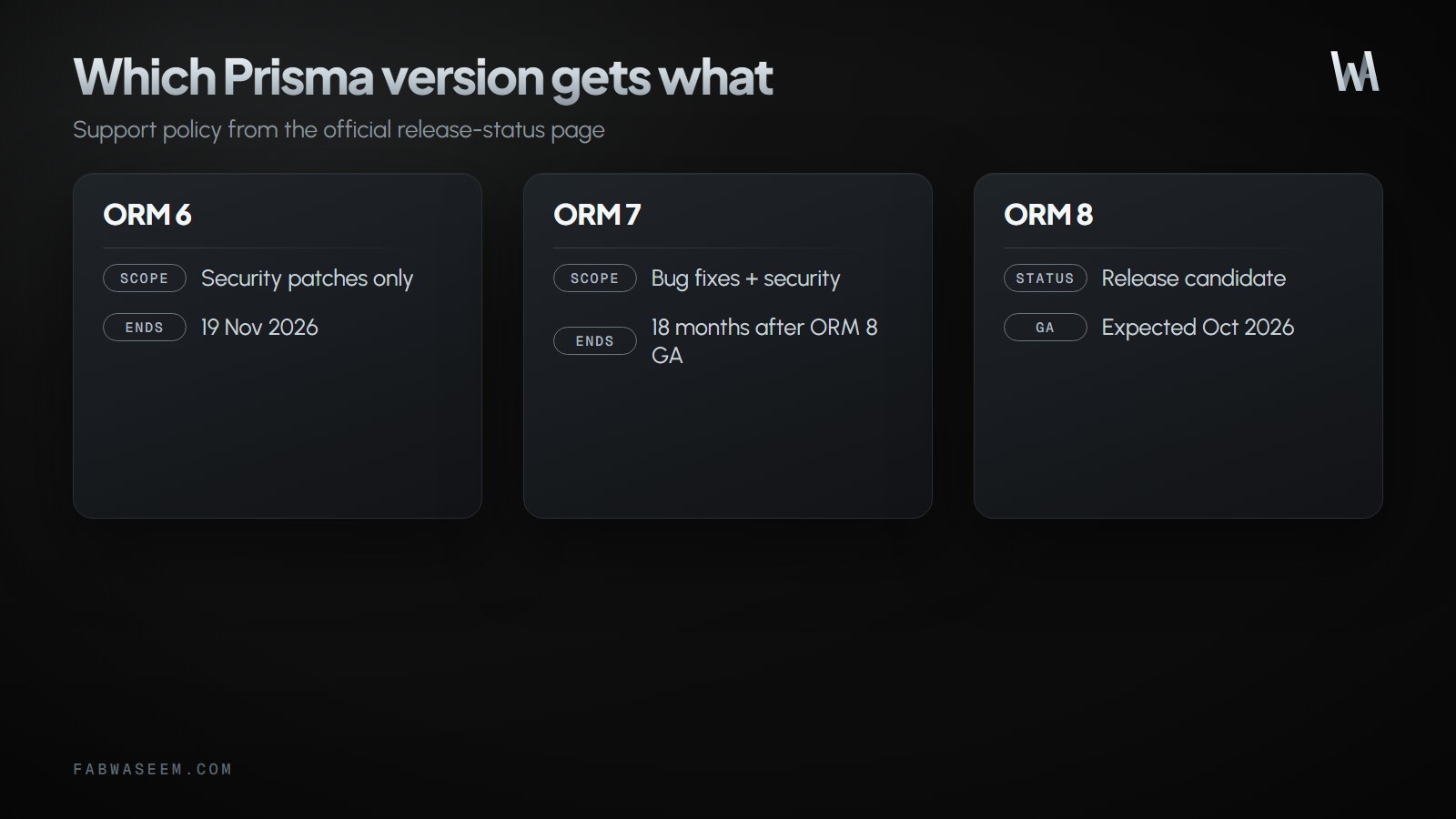
ORM 7 shipped as v7.0.0 on 19 November 2025 according to the Prisma changelog, which matches the 12-month window ending on the same day a year later.
Which versions are current right now?#
The page lists these latest versions as of 6 November 2026:
Note the split: the CLI and the libraries are versioned and released separately, and the page says to install both at latest. That is why the CLI can be on an 8.0.0 release candidate while the client is on 7.10.1.
Is ORM 8 out yet?#
Prisma's release-status page still lists ORM 8 as a release candidate, with GA expected in October 2026. Release candidate numbers may have moved since the page was last updated, so check the changelog or run npm view prisma dist-tags before you decide.
The changelog describes what ORM 8 is aiming at. Entries from the last few months mention that it works with an existing Prisma 7 schema (2 October), asks before dropping models or fields in migrations (9 October), and returns dates as JavaScript Date values (30 October). Those are release-candidate notes, so details may still change.
If you want background on the new generation, I covered it in Prisma 8: what changes.
What should you do before 19 November?#
For most teams the pragmatic target is ORM 7, not a release candidate. It is the stable line, and its support clock runs until 18 months after ORM 8 GA.
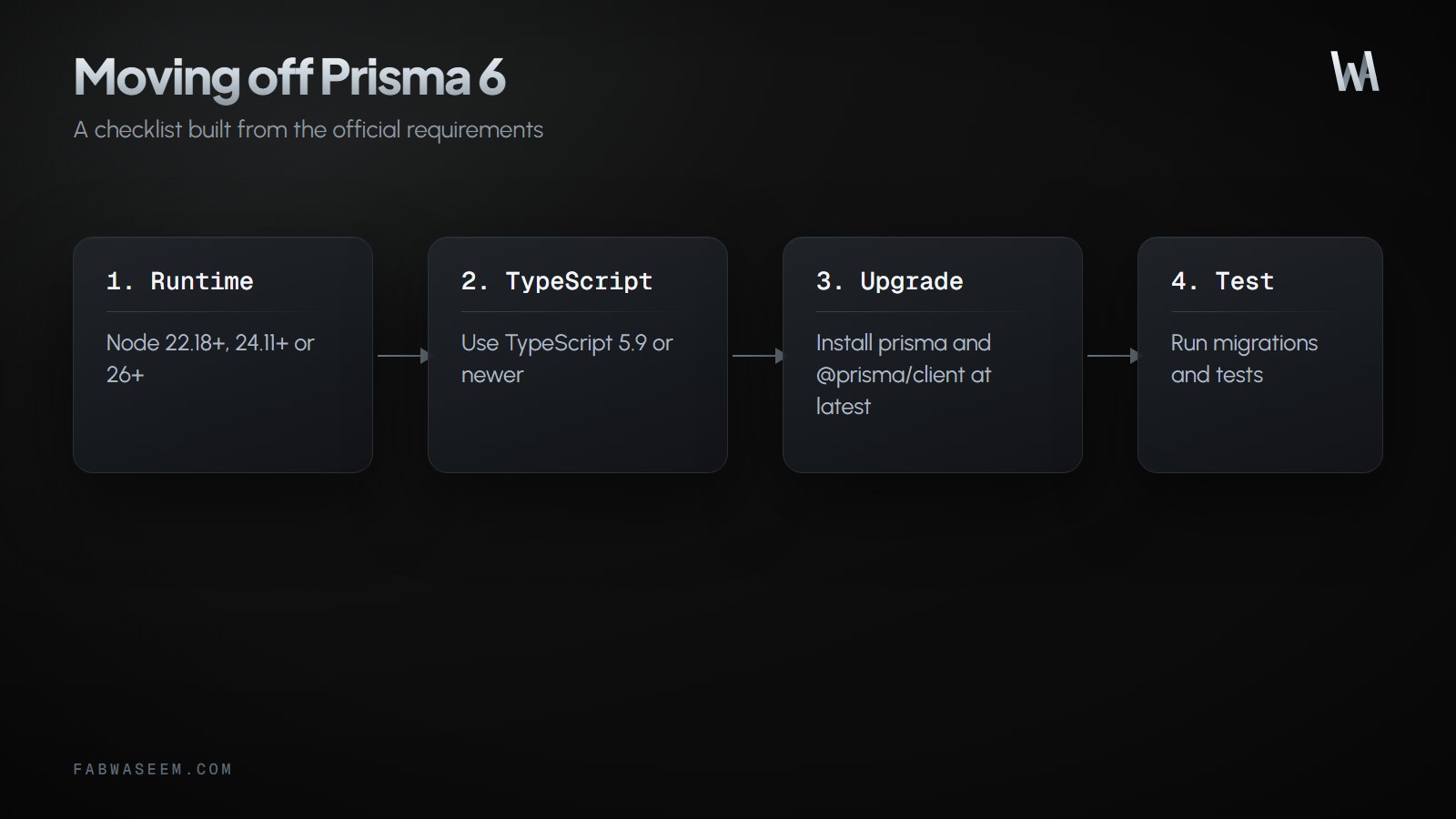
- Check your runtime. The page lists Node.js 22.18+, 24.11+ or 26+. If you are on an older Node, that comes first. My Node 24 vs Node 26 comparison helps pick one.
- Check TypeScript. The page lists TypeScript 5.9+.
- Upgrade both packages together. Install
prismaand@prisma/clientat the same ORM 7 version. - Test. Run your migrations against a staging copy of the database and your full test suite before touching production.
npm install prisma@7 @prisma/client@7
npx prisma generate
Read the official upgrade guide for breaking changes between 6 and 7 first.
Does anything stop working on the day?#
Nothing in the source says installed ORM 6 versions stop running. The change is about maintenance: a new vulnerability found after 19 November would not get a patch in the 6 line. For an API that handles user data, that matters. If you build backends on Prisma, my secure NestJS and Prisma API starter shows the kind of setup that benefits from staying on supported releases.
If you are weighing alternatives, Drizzle vs Prisma covers the tradeoffs.
Key takeaways#
- ORM 6 gets security patches only, and the official end date is 19 November 2026.
- ORM 7 is supported for 18 months after ORM 8 reaches GA.
- ORM 8 is still listed as a release candidate, with no GA announcement yet.
- Requirements: Node.js 22.18+, 24.11+ or 26+, and TypeScript 5.9+.
- Upgrade to ORM 7 in staging first, and verify against the official docs.
Sources: Prisma release status and the Prisma changelog.
Questions
Share this guide
Comments
No comments yet. Questions, corrections and your own results are all welcome.
Be kind and stay on topic. No name needed: leave it blank and you post under an anonymous name that stays yours. Links get
nofollow; spam is removed. Your email is never shown and is only used for reply notifications you ask for. Privacy